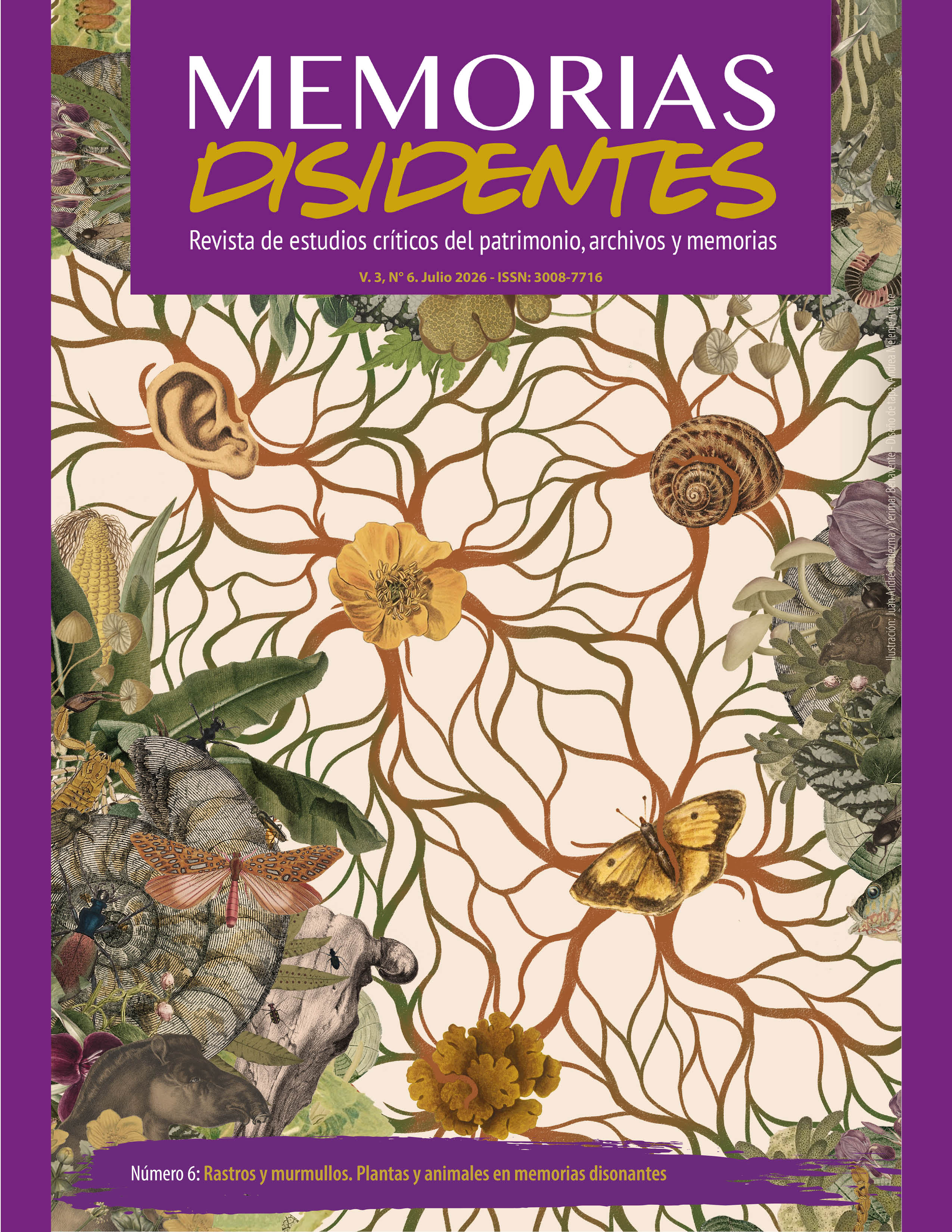
Traces and whispers. Unpredictable beings and the cultivation of difference in a world in the making
DOI:
https://doi.org/10.64377/30087716.1644Keywords:
non-human persons, interspecies consubstantiality, cultivating stories, Indigenous knowledgeAbstract
This introduction offers a reading of the contributions to the dossier as the pursuit of
three traces: unpredictable peoples, consubstantiality in the making, and the cultivation of distinct histories. The first trace asserts that all forms of life are peoples with unpredictable will, capable of teaching, spying, or changing, which demands constant attention to the signs of the environment. The second reveals that the world is not finished: hills raise their Indians, plants work in minga (collective labor) with human bodies, and life is mutually made through telluric and political processes. The third trace shows that differences between species are not erased but rather cultivated through alliances, care, and conflicts, as when trees are persuaded to bloom or dogs are healed with shamanic techniques, thereby achieving in the process the cultivation of distinct histories.
References
Caizales, M. y Alzate, A. (s.f.) Las sagas de la gente-planta-animal de los embera-chamí de Colombia. [Texto inédito].
Duperón, O. (Presentador). (2021, 15 de diciembre). Episodio 10 [Episodio de podcast de
audio]. En Podcast Odín. Spotify. HYPERLINK
https://open.spotify.com/episode/1isKPS3AHDDSFRBxV1kTpG?si=1xcojtZTTAmGb-bNrEVXug
Downloads
Published
How to Cite
Issue
Section
License
Copyright (c) 2026 Luis Alberto Suárez Guava, Laura Guzmán Peñuela

This work is licensed under a Creative Commons Attribution-NonCommercial-ShareAlike 4.0 International License.

-
The authors retain the rights of autxr and assign to the journal the right to first publication of the work, registered under the Creative Commons attribution license, which allows third parties to use what is published as long as they mention the authorship of the work and the first publication in this journal.
-
Authors may make other independent and additional contractual agreements for the non-exclusive distribution of the version of the article published in this journal (for example, including it in an institutional repository) as long as they clearly indicate that the work was first published in this journal.
-
The authors grant any third party the right to share and use the article (for non-commercial purposes), provided that the original authors and the citation of the version published in this journal are identified.